BingoPlus bingo games, live rooms, slots and Slingo
 Available in GB
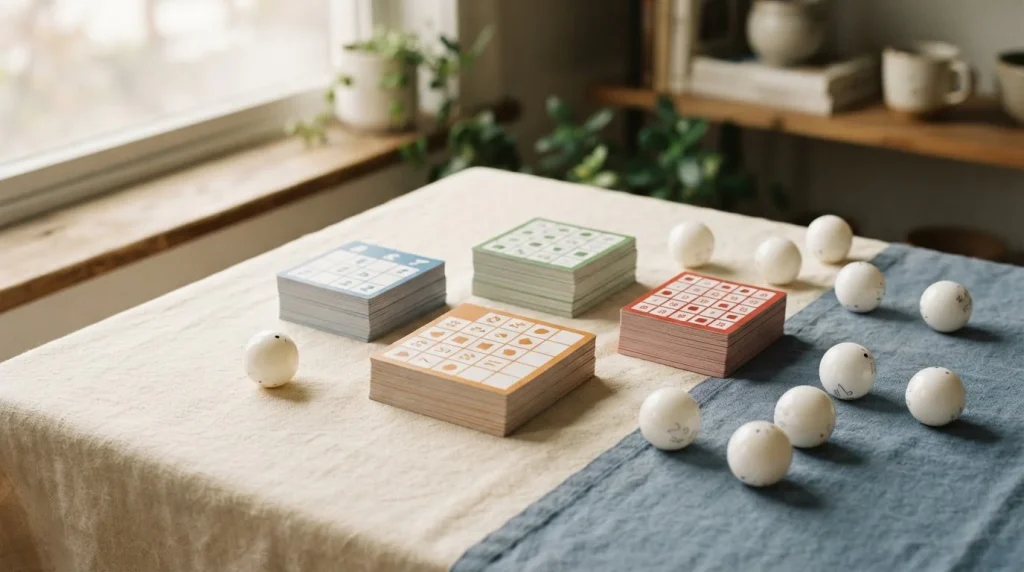
BingoPlus centres on live, presenter-hosted bingo linked to physical British bingo clubs. Its rooms include 75-, 80- and 90-ball bingo, with the 50-ball National Bingo Game also represented as a separate format. Slots and Slingo add a separate style of play. The principal difference is the rhythm of each session: shared live draws, scheduled games and on-demand spins involve money and time in different ways.
Table of Contents
- Live presenters give BingoPlus bingo its social rhythm
- The National Bingo Game uses its own draw format
- Slots and Slingo add a different pace of play
- Ball counts change the structure of a bingo game
- Software studios shape the library beyond bingo
- Common questions about BingoPlus
- Live bingo gives the catalogue its character
Live presenters give BingoPlus bingo its social rhythm
At the centre of BingoPlus is presenter-led bingo streamed from a connected network of physical UK bingo clubs. A host calls the draw, while chat and moderators allow a room to feel more like a shared event than an isolated game on a screen. This is a distinctive part of the BingoPlus experience: the entertainment includes the atmosphere of a bingo club even when the player is using a phone or desktop browser.
A live host changes the presentation of bingo, not the mathematical character of a ticket. A streamed draw can feel more immediate because the caller, player chat and visible running order create a shared sense of time. Nevertheless, each ticket’s chances depend on the game’s actual rules and the participating tickets; a friendly atmosphere cannot influence which numbers are called or guarantee a prize.
The network also connects digital players to a format with a recognisable place in British bingo culture. A hall-based draw has a common clock: participants follow the same call sequence rather than launching independent rounds whenever they wish. The host provides continuity through that shared sequence, and chat adds a separate social layer alongside the game. An online player can therefore choose between the communal pace of bingo and the more self-directed pace of other games in the catalogue.
The role of a moderator in a live room
The PlayBingoPlus app’s description and the platform’s technology partner both describe the presenter and chat format. Moderation helps organise a shared conversation, whereas the bingo call governs the actual numbered draw. These roles are connected in the viewer’s experience but have different purposes: conversation is social, and the call is the mechanism of play. Chat activity need not be treated as a prediction about upcoming numbers or an indicator that a player should increase spending.
Live bingo also makes session length an obvious practical consideration. A participant may stay for several consecutive games, even though a planned entertainment budget covers only a limited number of tickets. Account deposit and loss limits, time-outs and reality checks provide ways to define a boundary independently of the host or the room’s momentum. Those controls are described in the account and spending-limits explanation.
The format is well suited to spectatorship as an experience in itself, but a player still faces uncertain financial outcomes. Social features such as a presenter and chat can make time pass quickly. Money spent on bingo tickets is the price of participating in games with an uncertain return, not an amount that accumulates towards a predictable payout.
The National Bingo Game uses its own draw format
BingoPlus also carries the National Bingo Game, described as a 50-ball format. It belongs to the same broad family of numbered draw games but is distinct from the familiar 75-, 80- and 90-ball varieties offered elsewhere on the platform. The smaller set of balls is a format characteristic, not a promise about the time a participant will wait for a win.
Some UK site guides describe National Bingo Game sessions around 2 pm and 8 pm. Those are published session descriptions, not a fixed timetable for every future day. When a game is tied to a scheduled event, entering it has a different rhythm from opening an on-demand slot: the player follows a common start and the rules of that particular draw.
National Bingo Game draws are also an example of why a games catalogue is more than a count of titles. The important differences are the tickets, the number-draw format, the room schedule and the prize rules attached to the session. A long list of games cannot tell a reader how a particular live event is structured. Draw entry costs, prize arrangements and room conditions belong to the selected game rather than being assumed from another format.
Scheduled games require a different time budget
With a scheduled session, a player may plan around a fixed start and wait for a draw to finish. With an on-demand slot, rounds follow at the pace permitted by the game and the player. The former makes a session’s start more visible; the latter can compress a large number of wagers into a short period. Neither is inherently a method for reducing losses. They simply create different ways to spend money and time.
The interaction between a shared live draw and personal limits matters when games are played in succession. A session running longer than expected can mean additional ticket purchases if the player continues entering new rounds. A realistic budget treats each entry as a separate cost and does not count on a future win to fund further participation.
Slots and Slingo add a different pace of play
BingoPlus extends beyond its live rooms with slots and Slingo, alongside themed selections such as fishing-style games and Megaways titles. Descriptions of the wider catalogue put it at roughly 500–600 slot and casino games. That range describes the reported breadth of the offering, not the number of games simultaneously available to every account.
A slot is organised around successive paid spins and a game’s paytable, reels and features. Unlike a hosted bingo draw, it does not rely on a presenter calling numbers for a group. A game may have bonus symbols, multipliers or other mechanics, but those features are governed by its own rules. A dramatic animation can make a result more engaging without changing the amount actually won or lost.
Slingo sits between familiar bingo-style pattern completion and slot-style spins. It is a recognisable category in the BingoPlus library, with titles such as Slingo Extreme mentioned in UK descriptions of the platform. Its name reflects the hybrid presentation, but the experience should not be equated automatically with a standard live bingo room. A player who knows how a paper bingo card works still needs to understand the spin costs and game-specific feature rules before comparing the two formats.
Spin frequency changes how quickly a budget is exposed
A run of on-demand spins can involve many separate paid decisions within the period that a hosted room takes to complete one scheduled round. The number of wagers, stake per wager and underlying game rules together shape the cost of a session. The pace of a colourful interface cannot substitute for a view of total money committed.
Game design also influences the variability of outcomes. Return to player, often abbreviated RTP, is a theoretical long-run average across a large number of plays under a particular game configuration. Volatility describes how returns can be distributed across wins of different sizes and frequencies. Neither figure is an amount a person should expect to receive from a short session; individual results can be sharply different from any theoretical average.
Published game listings associate Big Bass Bonanza and Fluffy Favourites with BingoPlus. Such examples help illustrate a mix of fishing-themed and more traditional slot artwork, but individual titles and variants can change. A game’s exact stake range, paytable and feature conditions are specific to the selected version. The mobile bingo and app comparison explains how the live and on-demand categories translate to smaller screens.
Ball counts change the structure of a bingo game
BingoPlus features 75-ball, 80-ball and 90-ball bingo, in addition to the National Bingo Game’s 50-ball presentation. The number in each format describes the pool from which calls are made. It is not the price of a ticket, a jackpot figure or the number of tickets that a particular room sells. Each format is associated with its own card layout and pattern objectives.
| Bingo format | Card and draw structure | Typical winning objective | Play experience |
|---|---|---|---|
| 75-ball bingo | Numbers are drawn from a pool of 75, commonly on a five-by-five card | Completing a specified pattern, line or full card according to room rules | Pattern-led rounds with different possible targets |
| 80-ball bingo | Numbers are drawn from a pool of 80, commonly on a four-by-four grid | The room’s stated line, pattern or full-card requirement | Compact grid with shape-based objectives |
| 90-ball bingo | Numbers are drawn from a pool of 90, commonly on tickets with three rows of numbers | Commonly one line, two lines and full house stages | Familiar British multi-stage bingo rhythm |
| 50-ball National Bingo Game | National Bingo Game draw format uses a 50-ball pool | The prize and card objectives of that particular National game | Shared event with an announced session time |
These are explanations of standard bingo-format mechanics, not a claim that every BingoPlus room has identical prize rules, entry prices or winning patterns. The specific game screen governs the objectives for each draw. For example, a 75-ball pattern game may use a different target from the next 75-ball game, while the standard 90-ball structure often creates multiple prize stages within one draw.
Tickets and patterns matter more than the ball label alone
Knowing the ball count is the beginning of understanding a game, not enough to determine its chances or cost. The number of tickets issued, the price paid for each ticket and the winning pattern all influence how a session works. A person comparing 80-ball with 90-ball bingo should consider the actual card configuration and prize objectives alongside the ball count, rather than assuming that a smaller pool produces a better outcome.
A ticket is a stake in a particular draw. Buying several tickets creates additional paid entries; it also raises the amount put at risk in that round. The chance of a win and the financial result still depend on the game’s rules, the total participation and any prizes awarded. Spending more on entries cannot guarantee the result.
Software studios shape the library beyond bingo
The BingoPlus game selection includes work associated with Pragmatic Play, Blueprint Gaming and Slingo. Additional UK game directories name Eyecon, Inspired Gaming, Spinomenal and Wizard Games. The studios illustrate the range of design styles behind the slots and hybrid categories; they are different from the presenters responsible for the live bingo broadcast.
One supplier may create a fishing-themed slot, while another develops a feature-rich reel game or a Slingo variant. Distinct art, spin mechanics and payout structures can sit alongside each other under a single catalogue menu. The provider name gives useful context about who made the game, but does not by itself state its current RTP, stake range or volatility.
The same game family can contain several variants
Titles may appear in multiple versions or with different feature settings. A title in a general game listing is not a substitute for reading the rule panel for the particular version at hand. This is especially relevant when comparing a branded game title with a live bingo format, where ticket patterns and room schedules shape the experience differently from reel and paytable mechanics.
The library also mixes entertainment led by people with experiences led primarily by software. Presenter chat is part of the former; animations, reels and feature rounds define much of the latter. A player who prefers following a shared draw may find the slots menu quite different in pace and interaction, even though both are reached from the same account.
Game categories also connect to specific promotional conditions. The BingoPlus live-bingo credit described in UK site material is linked to spending on live bingo and then to a one-times playthrough of the resulting credit. That is not the same as an unrestricted slots allowance. The separate bingo credit and spins conditions explain which promotions concern which game categories, and why one offer should not be treated as a general rule for the entire games library.
- Live bingo: presenter, chat, shared calls and scheduled room participation.
- National game: a separately described 50-ball event with its own session structure.
- Slots: on-demand spins and game-specific paytables or features.
- Slingo: card-completion motifs combined with spin-style mechanics.
- Providers: individual studios supplying games with different visual and mechanical designs.
Regardless of category, the house retains a mathematical advantage in ordinary gambling games, and outcomes are uncertain. Variety can change the style of entertainment, while deposit and loss controls remain relevant across categories. The total entertainment cost comes from all amounts staked and lost, not from the breadth of the game menu.
Common questions about BingoPlus
Which bingo formats are available at BingoPlus?
BingoPlus offers 75-ball, 80-ball and 90-ball bingo, alongside the 50-ball National Bingo Game described in UK bingo directories.
Does BingoPlus use live presenters?
Yes. BingoPlus has presenter-led bingo streams connected to physical bingo clubs, with player chat and moderation.
Are slots and Slingo part of BingoPlus?
Yes. Slots and Slingo supplement the live bingo rooms, with games associated with providers including Pragmatic Play, Blueprint Gaming and Slingo.
How many slot and casino games does BingoPlus have?
UK game directories describe a catalogue of roughly 500–600 additional slot and casino games. The precise selection can vary.
Does playing more bingo tickets guarantee a win?
No. Extra tickets mean additional paid entries, while the outcome still depends on the draw, room participation and the game rules.
Live bingo gives the catalogue its character
BingoPlus is distinctive for presenter-led, club-linked bingo with 75-, 80- and 90-ball formats, supplemented by a 50-ball National Bingo Game and a substantial slots and Slingo library. The choice between a hosted draw, an on-demand spin and a hybrid Slingo game affects time, interaction and how stakes are committed. The variety is real, but the mechanics of each selected game determine its cost and possible outcomes. A live presenter can add atmosphere; a game category does not remove financial risk.